
What’s Next for Heads of Value Creation

In the current private equity landscape, growth is harder to find. Deal teams are rethinking what they underwrite. Most operating playbooks were written for a steadier market than this one. And the promise of AI is making operating partners reconsider their delivery approach for all value creation levers. So what’s worked in the past is in flux. But the firms that pull ahead over the next five years will be those that capitalize on this point of inflection.
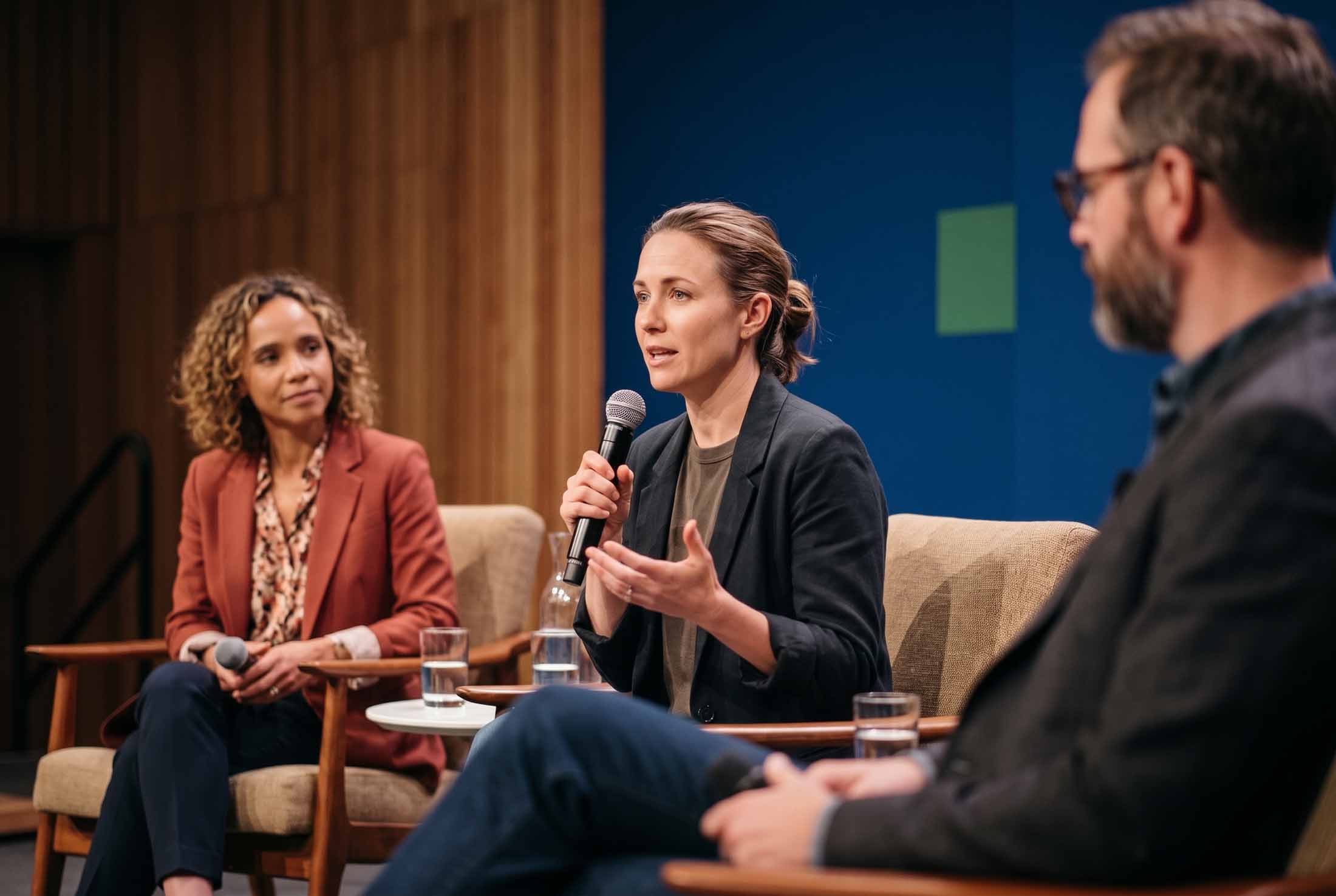
I recently moderated a panel at the PEI Operating Partners Forum New York about how heads of value creation teams are thinking about the future of organic value creation. The leaders on stage with me had a broad range of backgrounds — running teams at large-cap and mid-market firms; careers spanning consulting and operating roles; strategies that cover growth, LBO, and turnarounds; and expertise across pretty much all industries. This mix of executives offered a holistic picture of PE’s current state that is rarely available.
Taken together, their comments show what value creation leaders are facing right now. Four concepts came up again and again: how the PE-backed CEO job has changed, why operating partners need to take a stronger stand, that team design must mirror the firm’s strategy, and why value creation must start before the deal closes.
Every PE-Backed CEO Needs to Be a Wartime CEO
An investor I talk to often has said for a while that peacetime CEOs are a thing of the past. Every portfolio company CEO now has to operate as if it’s wartime, and that reality will likely hold for the next decade. At the panel, I put this to the group: how do you find someone with that mindset who also allocates capital well and understands the industry?
Nobody called it easy. These leaders still want the capital allocation instinct that experienced PE-backed CEOs bring. The problem is that pattern recognition built over two decades in one industry can now point the wrong way. One leader described the ideal CEO as a unicorn: someone who allocates like a veteran and learns like a newcomer.
Several of them screen for it early. One described a simple goal they have in diligence meetings: uncovering if a leader is a rock versus a sponge. The rock is tough and already has every answer. It isn’t looking for new input, so it isn’t going to change. The sponge is flexible and keeps absorbing information, taking notes, and making introductions to vendors worth meeting. The sponge is the person you need in the seat, but the tricky part is that a sponge still needs a spine. You want a CEO who listens and also holds a view.
Beyond the test, their approach was practical. They map leadership and run diagnostics before close, and they use coaches and executive programs to fill gaps. At least one leader pointed to the value of planning for a CEO change before anyone asks for it by placing a proven operator in a COO or chair seat early to make the leadership transition easier on the deal team when the time comes.
Operating Partners Need to Take a Stand
A CEO who has to be adaptable and change to meet the demands of value creation today is only half the story. The people supporting that CEO have to adapt too, and the value creation heads on the panel had a lot to say about it.
Because the importance of organic value creation has increased dramatically in this current economic cycle, several of the panelists expect operating partners to hold their ground with deal teams far more than they have historically. The wartime mentality isn’t limited to CEOs. For example, as AI spreads, deal teams will “see” their peers moving fast and ask why their own firm isn’t keeping up. The operating partner is the one who ultimately answers for portco progress and results, and an operating partner who primarily advises and keeps people comfortable will struggle to maintain credibility with deal teams.
That points to two things these leaders want from operating partners:
- Operating partners need to own the room. That means having a specific point of view in a defined area of expertise, whether that’s a function or the experience of living through several downturns. It also means staying humble enough that people still want to work with them.
- Operating partners need to get out of the office. One firm made this an explicit cultural value, and the logic is hard to argue with. Change isn’t happening in a conference room; it’s in the portfolio, with vendors, and in the labs building the technology. To be part of the change, operating partners need to be in the room.
The ideal operating partner profile that emerges is someone who has been through turnarounds, digital disruption, and cycles where the old rules stopped working. I said on stage that periods like this are where careers and portfolios get built. They’re also exhausting, and take real grit to survive.
Team Design Should Follow the Firm
Once you know what you need from operating partners, the next question is how to structure the GP’s value creation team. For years, the pendulum swung between deep functional specialists and generalists, so I asked where the group thought it would land in five years.
The most honest answer was that it depends on your firm’s culture, how you compensate people, and your value creation model. “Answer those questions,” one panelist said, “and I’ll tell you where to start.” The consensus was that a structure borrowed from another firm won’t hold up. One firm embeds functional operators from day one. Another manages and strategically deploys a large bench of specialists to affect specific components of the VCP, but has also added generalists over time to make sure the parts add up to the whole.
Capacity is also a negotiation. One leader built a lean, AI-enabled function that now delivers outsized results with a very small team. It took years to build, and the first stretch looked unproductive to those on the outside. They found that initially it was unrealistic to place a dedicated AI person in every portfolio company. They pick a few themes each year, bring in true experts who can move across the portfolio, and standardize what comes out of it. The lesson was to agree on capacity, ask for room to build capability, and set clear accountability.
This is where I see a lot of smaller teams thriving. Today is a better time than any I can remember to build an operating team. With the right external partnerships and tools, a small group can operate as if it were much larger. The delivery gap between a team of five and a team of fifty is narrower than it has ever been, but only for teams being thoughtful about org design.
Value Creation Starts Before Close
The last idea tied the others together. Across two days at the forum, I kept hearing about getting ahead on operational diligence. Firms want to arrive on day one ready to act, with systems and tools already assessed, so they aren’t spending the first six months analyzing. Six months without the right people and systems is six months of lost value.
The value creation leaders on the panel took it further. Several sit on or near investment committees, and they want in on the thesis early. They add far less when they’re handed a management team and an investment case than when they help shape the deal and the VCP. Underwrites are also less linear now, and revenue doesn’t grow 10 percent per year on a straight line, so value creation scenarios get real attention, and creative options, like removing an entire function, can change the math.
What Comes Next for Value Creation
Put these ideas together, and the picture is consistent. Today’s PE-backed CEO has to adapt faster, the operating partner has to push harder, the team has to fit the firm, and the work has to begin before the deal closes. None of that is new advice, but the speed of the market is raising the stakes on every piece of this puzzle.
AI sits underneath all of it, and I see it on the ground in conversations with PE firms and their portfolio companies. In the last three months alone, AI came up in 51% of Catalant conversations with PE clients, up from 35% in the same window a year ago. The conversation has moved from studying AI to putting it to work. What gets in the way is rarely the technology. It’s talent, capacity, and the ability to prove value.
Consider this: in a recent Catalant survey of post-sales leaders at PE-backed companies, more than 90% hadn’t attributed a quantified result to AI.
That’s one function, not the whole portfolio, but it fits what these private equity veterans described. The next stage of value creation depends on getting AI to work, and that depends on a targeted approach to deploying people and technology to solve for discrete value creation levers identified during diligence.
What if you could build a small, well-run team of experienced operators around your value creation plan, without the six-month search?
Talk with our teamMeet the Author
Pat Petitti is Co-Founder and CEO of Catalant. As the creator of Consulting 2.0, Catalant offers a novel consulting model delivering flexible, fit-to-purpose solutions to leading private equity firms and enterprises. Prior to founding Catalant, he was a consultant at negotiation and conflict management consulting firm Vantage Partners, and before that at Booz Allen Hamilton. Pat holds a Master of Business Administration from Harvard Business School and a Bachelor of Science from the Massachusetts Institute of Technology.
Private equity firms should select portfolio company CEOs who combine veteran capital allocation skill with a willingness to keep learning. Value creation leaders on a Catalant-moderated panel at the PEI Operating Partners Forum New York describe screening for adaptable executives over fixed-answer executives, because two decades of single-industry pattern recognition can misdirect decisions. Firms also map leadership and run diagnostics before close and place proven operators in COO or chair roles early to prepare for CEO transitions.
Private equity firms should expect operating partners to hold a defined point of view and challenge deal teams rather than only advise. Credible operating partners hold expertise in a specific function or in surviving multiple downturns, remain humble, and spend time in portfolio companies, with vendors, and in technology labs. Operating partners answer for portfolio company results, so advisory-only roles lose credibility as AI adoption raises deal team expectations.
Value creation team structure should follow firm culture, compensation design, and value creation model rather than copy another firm. Some firms embed functional operators in portfolio companies from day one, while others deploy specialist benches and add generalists to integrate value creation plan components. Small teams with external partnerships and AI-enabled tools can now narrow the delivery gap with far larger teams when organization design is deliberate.
Private equity value creation work should begin before deal close, during operational diligence and investment thesis development. Firms that assess systems, tools, and leadership before close can act on day one instead of spending six months analyzing. Six months without the right people and systems forfeits value. Value creation leaders who shape the thesis and value creation plan early add more value than leaders handed a finished management team and investment case.
AI now shapes private equity value creation conversations, appearing in 51% of Catalant discussions with private equity clients in the last three months, up from 35% a year earlier. Talent, capacity, and proof of value limit results more than technology does. A Catalant survey found 94% of post-sales leaders at PE-backed companies had not attributed a quantified result to AI.