

The Future of Transformation: Four Themes from Catalant’s Transformation Survey (Infographic)

Modern enterprises frequently invoke the idea of transformation, but few truly master it. The challenge of successful transformation is not a lack of ambition but the persistent friction between a visionary strategy and the gravity of daily operations. True transformation is a disciplined realignment of an organization’s core capabilities to meet the needs of a shifting world.
Transformations impact every function and every layer within an organization, which can make it difficult to get an accurate picture of what it takes to transform successfully or why an initiative went off track. To move beyond theoretical answers, we analyzed the collective experience of seasoned transformation consultants within the Catalant Practice Community. These professionals — alumni of top-tier firms and former corporate executives — offer a perspective shaped by their hands-on experiences in the front lines of transformation execution. Their insights reveal that successful transformation is a craft defined by focused investment, rigorous accountability, and active leadership.
The following infographic explores what these experts have observed in the field: the common points of failure, the non-negotiable drivers of success, and the emerging blueprint for a change-seeking organization.
Preparing for the Future
Setting your organization up for success requires a long-term view — an understanding that while AI and technology are powerful accelerants, they will only deliver value when supported by a foundation of clear accountability, cultural alignment, and executive presence. The organizations that will thrive in the coming years will be those that have institutionalized the ability to learn, adapt, and execute with precision.
As you navigate your next phase of evolution, remember that you do not have to walk this path alone. The wisdom of those who have navigated these waters before is your most valuable asset.
At Catalant, we connect you with the experienced, hands-on professionals needed to bridge the execution gap and turn strategic intent into lasting enterprise value. Whether you’re at the starting point of designing where your organization goes next or need hands-on help to save a struggling transformation in progress, our community of experts is here to help.
Are you positioning your company for the future?
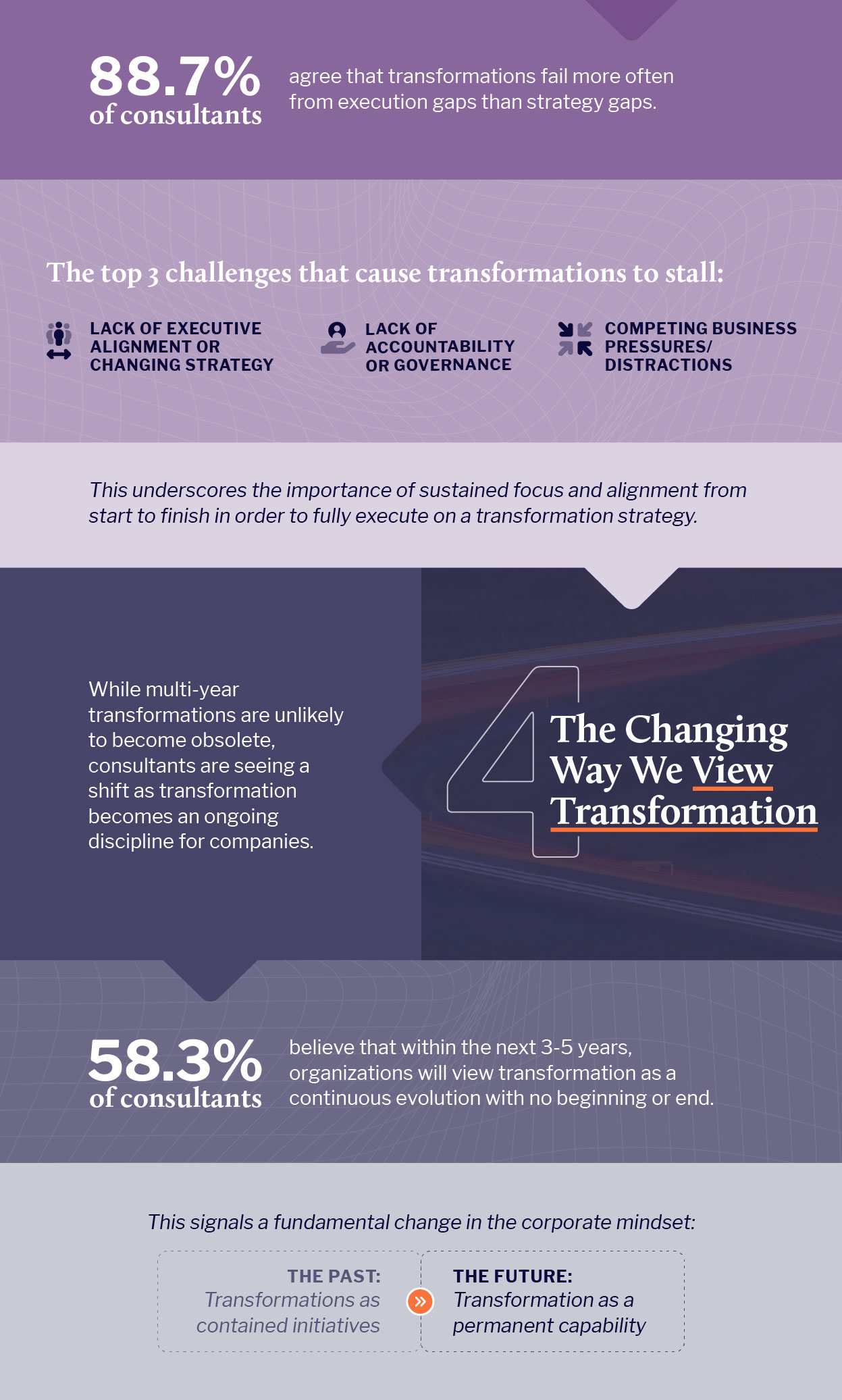
Get in touchCatalant research reveals that 88.7% of transformation consultants identify execution gaps, rather than flawed strategy, as the leading cause of transformation failure. The gravity of daily operations often creates friction that stalls even the most visionary plans. Institutional friction typically manifests as a lack of executive alignment, poor governance, or competing business distractions. To overcome this, organizations must move beyond theoretical planning and focus on the disciplined realignment of core capabilities to ensure strategy translates into measurable enterprise value.
A Catalant study shows that 58.3% of industry experts expect organizations to view transformation as a permanent capability with no defined start or end date within three to five years. This indicates a fundamental shift away from viewing transformations as contained, multi-year initiatives. Modern enterprises are increasingly institutionalizing the ability to learn and adapt as an ongoing discipline. This transition requires leaders to stop treating change as a periodic project and instead build a foundation of permanent agility to navigate constant market shifts.
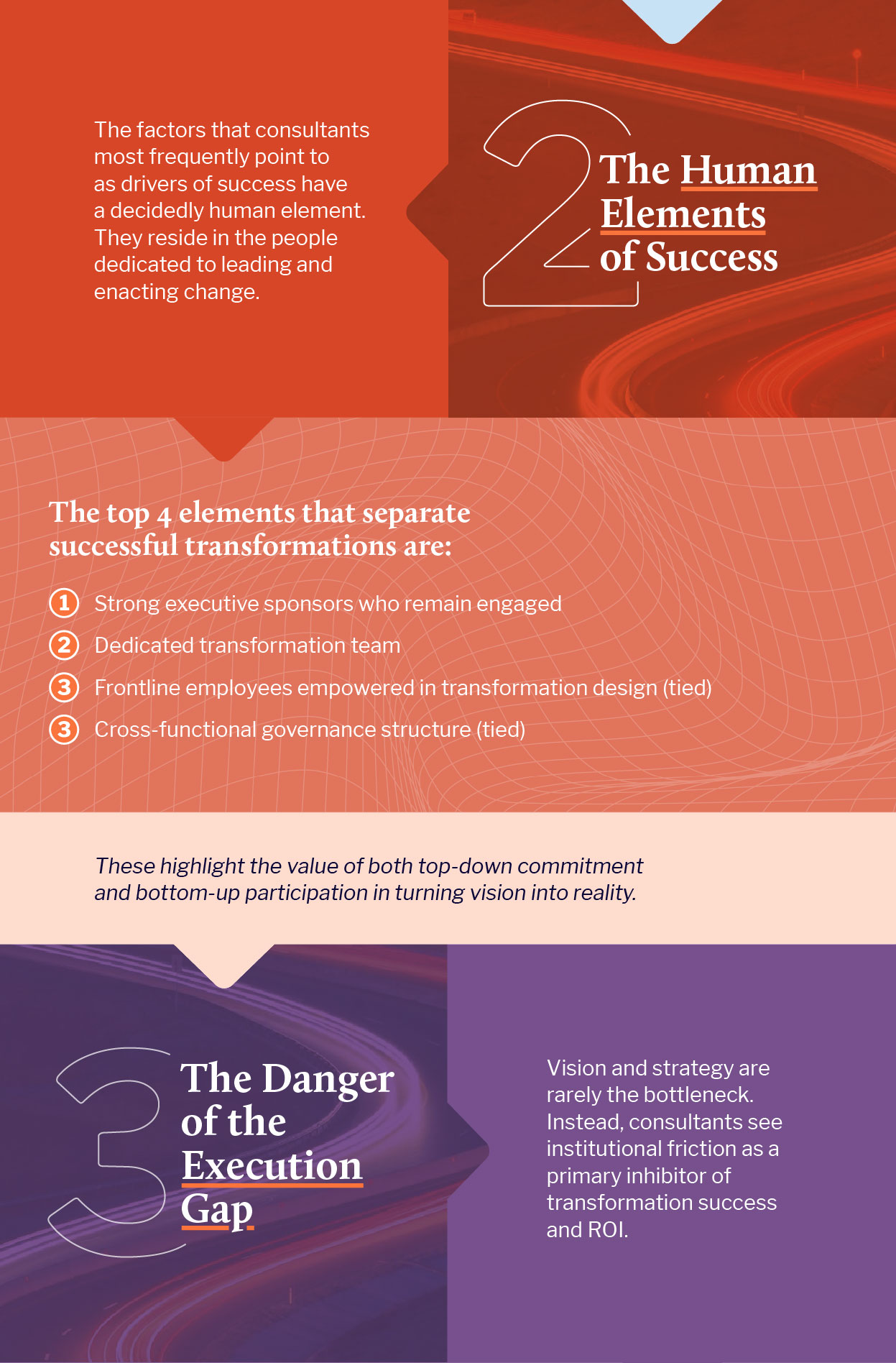
Transformation success depends on a balance of top-down commitment and bottom-up participation, specifically driven by engaged executive sponsors and empowered frontline employees. Research from the Catalant Practice Community reveals that dedicated transformation teams and cross-functional governance are non-negotiable drivers of ROI. When frontline workers are involved in the design of the transformation, the organization reduces cultural resistance. Active leadership and clear accountability structures are the essential human components that turn strategic intent into lasting results.
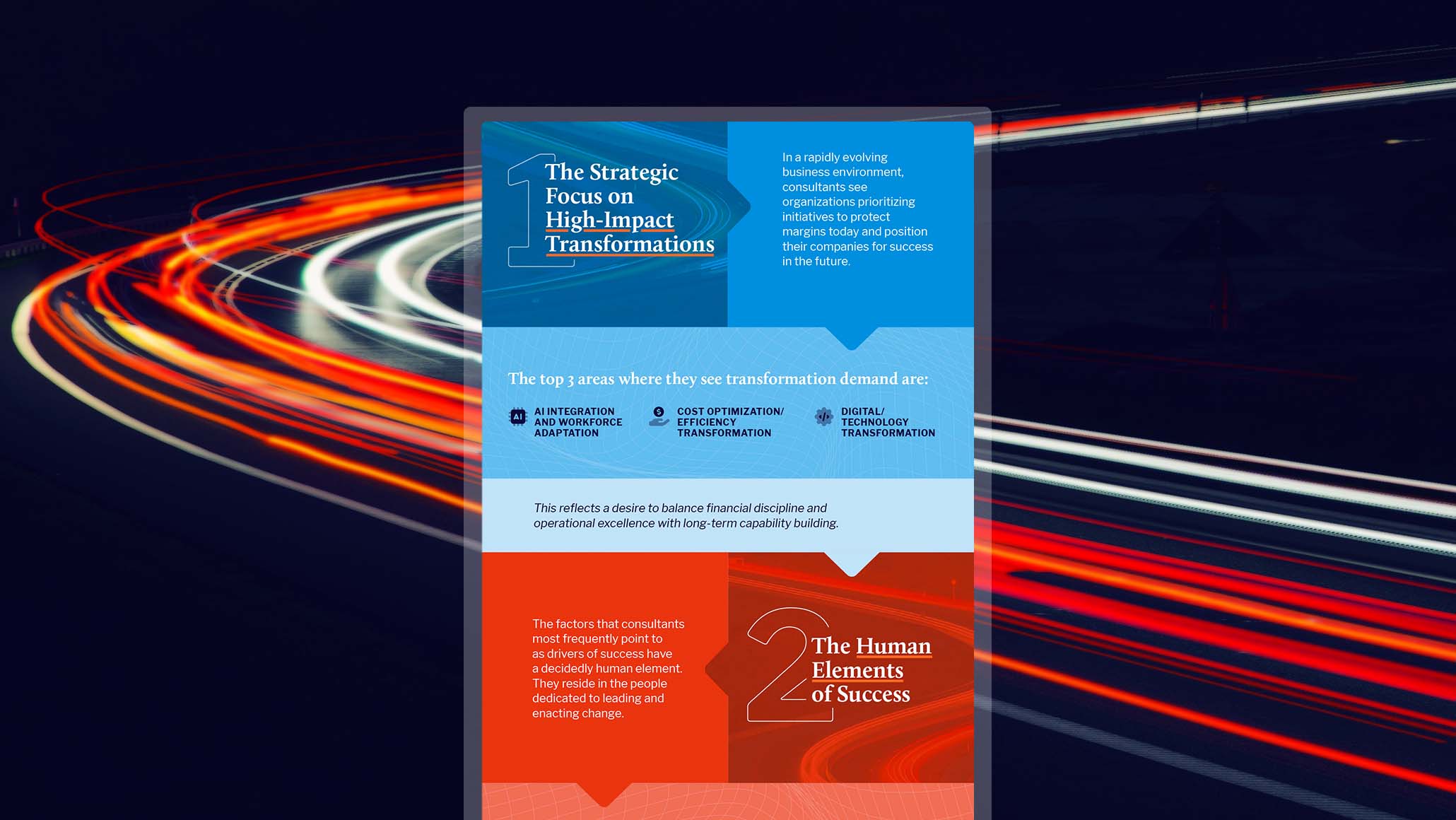
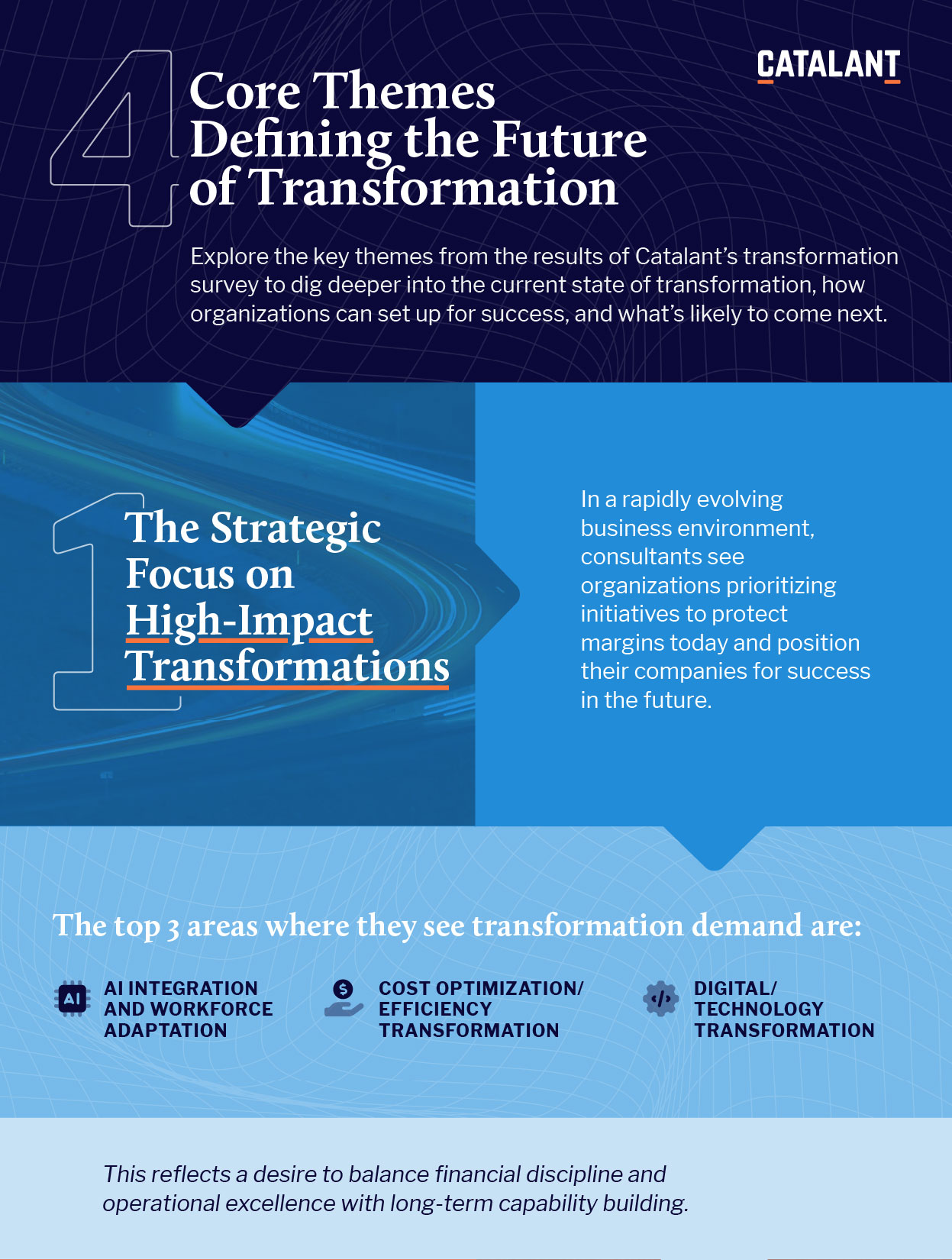
Organizations are prioritizing AI integration, workforce adaptation, and cost optimization to balance financial discipline with long-term growth. Catalant survey data shows that digital and technology transformations remain top priorities as companies seek to protect margins while building new capabilities. These investments reflect a strategic need to modernize technical stacks while simultaneously preparing the workforce for new AI-driven workflows. Achieving value in these areas requires a foundation of cultural alignment and executive presence to ensure technology delivers a real return.
Leaders must minimize institutional friction by establishing rigorous accountability and sustained executive alignment. Catalant experts suggest that many initiatives lose momentum because of changing strategies or a lack of clear governance. To bridge the gap, firms should leverage experienced, hands-on professionals who can navigate complex execution hurdles. By focusing on precision in execution and removing competing distractions, an organization can ensure that its primary investments in AI and technology result in improved operational excellence.